/
Growth
The rates Uber Eats publishes, plus the pickup order the platform provides no courier for and still charges 14% on.

Read time
6
min
Written by
Team SOUS
Published
Key takeaways
This article in a few bites
When the platform supplies the courier, commission can run up to 30% of the order value.
Whoever holds the guest data decides whether that guest comes back to you directly a second time.
On a pickup order the platform provides no courier and can still charge you 14% of the order value, as Uber Eats does in the Netherlands.
On an average order of €45 that comes to €6.30, against a 1% service fee of €0.45 on the same pickup order through your own ordering page.
Pickup and repeat orders are the easiest to move to your own ordering channel, because that is where the platform does the least for you.
An order through a delivery platform costs you commission on the full order value, and the percentage depends on who delivers: up to 30% when the platform supplies the courier. Uber Eats publishes its own restaurant rates, and in the Netherlands, for example, that is 30% with their courier and 14% when you deliver yourself or the guest comes to pick up. On top of that percentage you have no idea who placed the order, and that loss appears on no invoice.
On the fifth order from that same guest you still pay the same percentage as on the first.
That is what SOUS was built for: your own ordering channel alongside the platforms, with no platform commission on direct orders and a service fee from 1% instead. With several locations that saves money per location on every order that comes in directly.
What exactly does Uber Eats charge?
Uber Eats, Netherlands | |
|---|---|
Uber delivers | 30% |
You deliver yourself | 14% |
Guest picks up | 14% |
You deliver yourself to an Uber One member | 12% |
One-off activation | €400 |
Uber Eats publishes these rates on its own restaurant page for the Netherlands. Other markets and other platforms set their own, and the rate in your contract is the one you pay.
The pickup order is the bill that weighs heaviest
At those Dutch rates you pay Uber Eats 14% even when the guest comes to pick up the order.
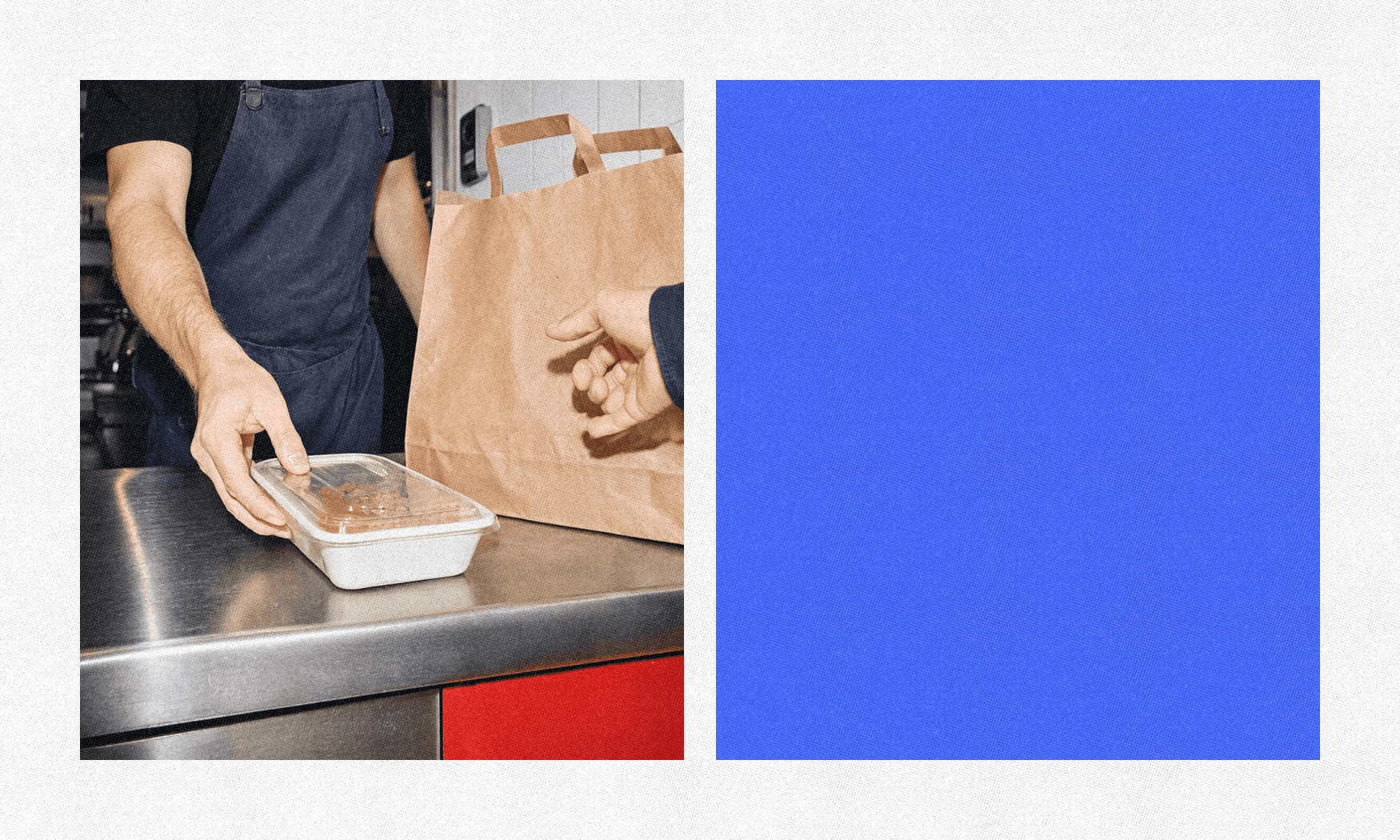
On an order like that the guest drives over and takes the food out of your own venue, without the platform providing a courier or a route. What the platform does is list you in the app with an order button next to your name, and you pay 14% of the order value for that. On an average order of €45 that comes to €6.30 each time.
Those pickup orders are the easiest ones to move to your own ordering channel, because the guest is standing in your venue anyway.
What you lose beyond the commission
The commission is on the invoice, so you can check that one yourself. The rest of what a platform order costs you is written down nowhere.
You do not know who placed the order: the email address, the phone number and the order history stay with the platform. That means you cannot send an offer to a guest who has ordered the same dish three times, and you cannot see which neighbourhood or which location is growing fastest. With one venue that is a shame. With six locations you miss that comparison six times, at exactly the moment you want to know which location is falling behind.
This runs deeper than the percentage: whoever holds the guest data decides whether that guest comes back to you directly a second time.
What does the same order cost through your own ordering channel?
On your own ordering channel you pay in a completely different way, and it is worth putting the two side by side, because the commission percentage on its own says too little.
Via a platform | Via your own ordering page with SOUS | |
|---|---|---|
Cost per order | commission, up to 30% | a service fee, from 1% on pickup and from 3% on delivery (SOUS Commerce Launch and SOUS Commerce Grow) |
Payment costs | absorbed into the commission | the transaction costs of the payment |
Fixed monthly amount | none | €159 per month for SOUS Commerce Launch |
Customer data | stays with the platform | stays with you |
Delivery | courier from the platform | through delivery partners in the Netherlands and Belgium |
SOUS Commerce Launch includes SOUS Spotlight, and every extra location costs €99 per month. Because that amount is fixed per location, you know in advance what a new location adds.
A platform charges a percentage that grows along with every order, including the hundredth order from the same guest. Your own ordering channel has a fixed monthly amount, a service fee from 1% and the transaction costs of the payment, so the more direct orders you get, the lower your cost per order becomes.
At the Dutch Uber Eats rate of 14%, an average order of €45 sends €6.30 to the platform. Through your own ordering page, the service fee on that same pickup order is 1%, which is €0.45, plus the cost of the payment itself.
SOUS Commerce Launch is priced on an annual contract, billed monthly. On a flexible contract it costs €199 per month.
When is it worth making the move?
Moving over happens step by step, with the platform simply staying where it is.
The question is which share of your orders does not need to sit there. Look at two numbers: how many of your orders are pickup, and how many come from guests who have ordered from you before. Those are the two groups the platform does the least for and earns the most on.
Put your own ordering channel with SOUS Commerce next to it and leave the platform in place for new guests, while you move the repeat and pickup orders across. With two or more locations that adds up quickly, because both the percentage and the duplicated work scale per location.
Frequently asked questions
Are these rates negotiable?
For Uber Eats they are published on their own restaurant page, which suggests these are the standard rates. Whether larger volumes get different terms in practice has not been made public.
Do I also pay commission on the delivery fee the guest pays?
That is not in the published rates and it differs per platform and per contract. Your own statements do show it, so check those.
Can I stay on the platforms and have my own ordering channel?
Yes, and for most venues that is the most sensible route as well. The platforms bring in new guests, and your own ordering channel through SOUS Commerce picks up the repeat orders without platform commission.
What happens to my existing guests if I make the move?
You cannot take them with you out of a platform, because you do not have their details. What does work is reaching them while they are with you. A QR code on the packaging does that, and so does a card in the bag or an offer on the receipt.